

Business Contract Review Checklist for Indian Companies
A business contract should translate a commercial understanding into obligations that can be followed, measured and enforced. Before an Indian company signs, the review should test whether the document identifies the right parties, describes the deal accurately, includes clear contract clauses, allocates risk sensibly and provides a workable exit if performance fails.
This business contract review checklist is a practical starting point for founders, directors, finance teams, procurement teams and in-house counsel. It is not a substitute for advice on a particular transaction, but it can help a company identify issues that deserve clarification before signature.
Quick contract review table
Use this table as a first-pass review tool. Each point should be read with the complete agreement and the facts of the transaction.
|
Review area |
Questions to ask |
Why it matters |
|---|---|---|
|
Parties and authority |
Are legal names, registrations and signatories correct? |
The obligation should bind the intended entity through an authorised person. |
|
Scope and acceptance |
Are deliverables, standards, dates and acceptance steps measurable? |
Clear performance criteria reduce operational disagreement. |
|
Price and payment |
Are taxes, invoices, milestones, credits and interest addressed? |
Commercial teams need a complete payment mechanism. |
|
Risk allocation |
Are warranties, indemnities, exclusions and liability caps coherent? |
Risk should reflect control, value and available insurance. |
|
Term and exit |
Can the company cure, terminate and complete an orderly handover? |
A usable exit clause limits disruption when the relationship ends. |
|
Dispute process |
Do governing law, forum and escalation clauses work together? |
Conflicting clauses can increase cost before the merits are heard. |
Why review a business contract before signing?
Indian contract law generally recognises agreements that satisfy the requirements described in section 10 of the Indian Contract Act, 1872. A document can still create serious commercial exposure even when a clause is unclear, incomplete or commercially one-sided. Review therefore involves more than checking whether a contract exists. It asks whether the written terms match the transaction the company intends to perform.
Early review is usually more efficient than trying to reconstruct an understanding after delivery, delay or non-payment. It also gives finance, operations, technology and leadership teams a shared record of what was accepted.
Check the parties, authority and execution
The first review stage confirms who is entering the agreement and whether the document will be executed in a form appropriate to the transaction.
Correct legal identity
Use the full legal name of each company, its entity type, registered office and relevant registration or tax details. A brand name, division or informal group name may not be the legal person responsible for performance. If a parent, affiliate or guarantor is expected to support the deal, state its role expressly.
Authority of the signatory
Confirm the signatory’s authority under the company’s internal approvals, delegation matrix, board resolutions or power of attorney, as applicable. The signature block should match the legal entity named at the beginning of the agreement.
Execution, stamping and counterparts
Check the proposed signing method, number of counterparts, witnessing or notarisation requirements, and applicable stamp duty. These questions vary by instrument and state, so the execution plan should be settled before the document circulates for signature.
Define the commercial bargain clearly
The contract should describe what is being bought, sold, licensed or performed in language that operations and finance teams can apply without guessing.
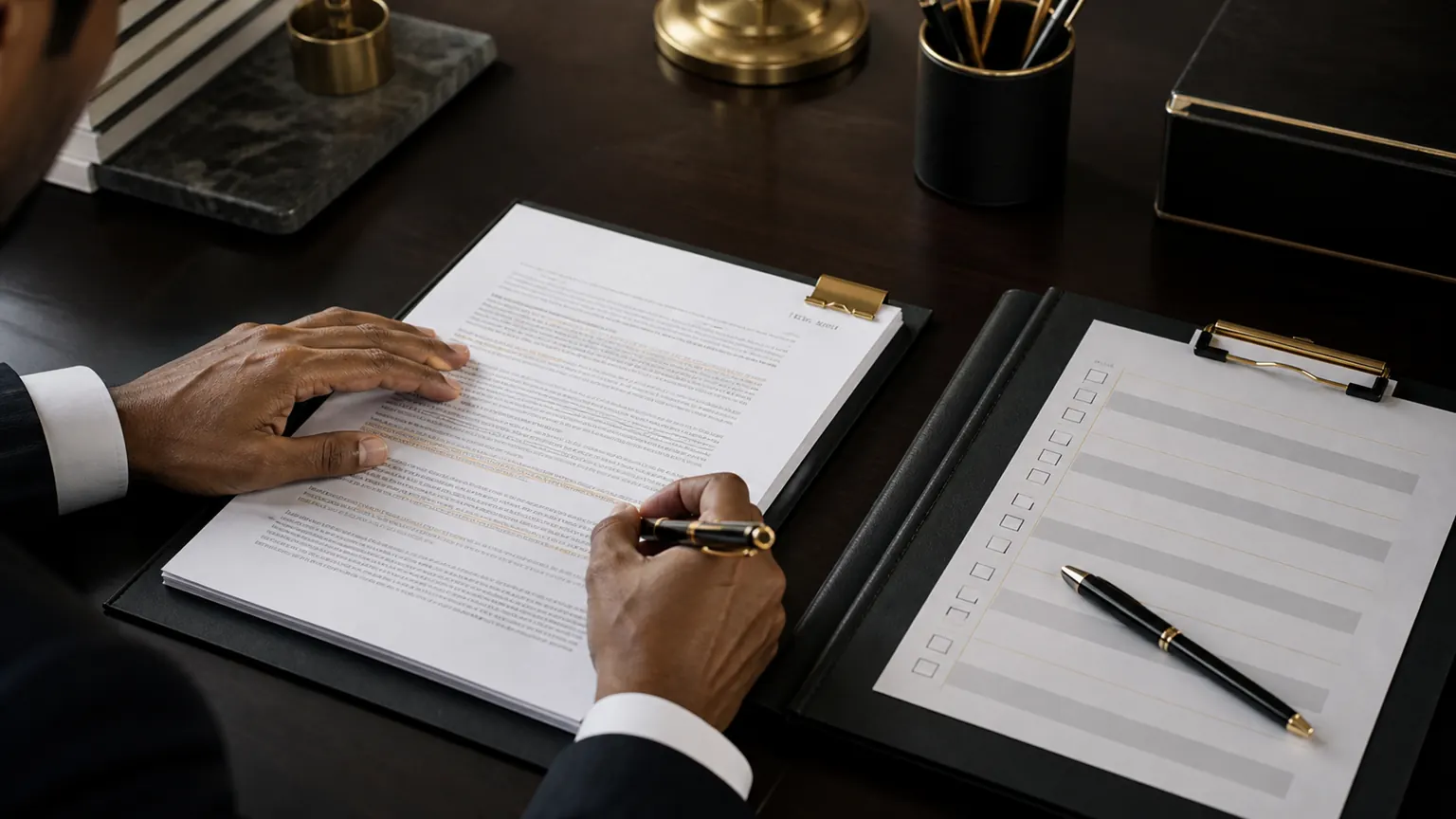
Scope, deliverables and dependencies
List deliverables, quantities, specifications, service locations, milestones and dependencies. Identify which party supplies data, access, approvals, equipment or personnel. If a statement of work or purchase order will contain details, define which document prevails when terms conflict.
Timelines and acceptance
Use objective dates or milestone triggers. An acceptance clause should explain the review period, testing standard, rejection reasons, correction process and effect of silence. Avoid a structure in which payment becomes due before the company has a fair opportunity to verify performance.
Price, taxes and invoices
State the price, currency, taxes, reimbursable expenses, invoice requirements, payment milestones, credits and any permitted set-off. If interest may apply to delayed payment, specify the basis carefully and test it against any mandatory law that may apply, including the delayed-payment framework for eligible micro and small enterprises.
Review warranties, indemnities and liability
Risk clauses should be read together. A broad warranty, uncapped indemnity and narrow exclusion can shift more risk than the commercial headline suggests.
Representations and warranties
Separate statements about present facts from promises about future performance. Verify that each warranty is accurate, capable of being tested and limited by appropriate knowledge, materiality, time or disclosure qualifications where justified.
Indemnity procedure
Define the losses covered, the events that trigger protection and the process for notice, defence and settlement of third-party claims. The protected party should not lose a valid claim merely because of a minor notice defect that caused no prejudice.
Liability caps and exclusions
Check whether the cap is linked to fees, insurance or another rational measure. Confirm which claims sit outside the cap and whether indirect or consequential loss exclusions are defined consistently. The final allocation should reflect who controls the risk and the likely impact of failure.
Protect confidential information, data and intellectual property
A contract should distinguish pre-existing assets from material created during the engagement and should give each party the rights needed to perform.
Confidentiality
Define confidential information, permitted recipients, security obligations, exclusions and the duration of protection. Include a procedure for legally compelled disclosure and specify what happens to information and copies when the relationship ends.
Intellectual property
Identify background intellectual property, project deliverables, licences, ownership of improvements and third-party materials. A statement that a customer owns all work may be unworkable when the supplier uses reusable tools or licensed components.
Data handling
Describe the categories of data involved, purposes of processing, access controls, breach reporting, retention, deletion and subcontracting. Sector-specific duties and applicable privacy law should be reviewed for the actual processing arrangement.
Plan for duration, termination and handover
A company should understand both how the agreement renews and how it can end without creating an operational gap.
Term and renewal
State the start date, initial term, renewal mechanism and notice window. Automatic renewal should not quietly lock the company into new pricing or a long commitment without an internal decision point.
Breach, cure and termination
Distinguish remediable breach, material breach, insolvency events and termination for convenience. Section 39 of the Indian Contract Act addresses a party’s refusal or disabling itself from performing a promise, but the correct response depends on the contract and facts. A cure mechanism should be long enough to be workable and short enough to protect the affected party.
Exit assistance
Require return of property and data, transition support, final invoicing, knowledge transfer and survival of selected clauses. If the vendor controls important systems or records, specify accessible formats and handover deadlines.
Make the dispute clause workable
The dispute section should provide a coherent path from operational escalation to a final forum.

Negotiation and mediation
Name the representatives who will escalate a dispute and set realistic response periods. A mediation step can support settlement, but it should not prevent urgent interim relief where protection is needed.
Arbitration or courts
If arbitration is selected, address the seat, venue, number of arbitrators, appointment process and language. If courts are selected, ensure the jurisdiction clause has a legal connection to the transaction and does not contradict the governing-law clause.
Notices and evidence
Specify physical and electronic notice addresses, deemed-receipt rules and the people responsible for monitoring them. Preserve signed versions, amendments, approvals, delivery records and correspondence in a searchable contract file.
Common contract red flags
Pause before signature when the document contains blank schedules, undefined deliverables, unilateral price changes, unlimited exposure, conflicting precedence clauses, vague acceptance, an impractical dispute forum or rights that do not match operational reality.
- The counterparty named in the document is not the entity issuing invoices or delivering services.
- Business-critical terms appear only in emails and are not incorporated into the agreement.
- The liability cap protects only one party or does not apply to the most likely claim.
- Termination is available, but there is no data return, handover or transition obligation.
- The contract refers to policies that can be changed unilaterally without notice.
When should a company obtain legal review?
Legal review is particularly useful for high-value, long-term, regulated, technology, data-intensive, cross-border or business-critical transactions. It is also appropriate when the document is on the other party’s standard terms, contains unusual indemnities or restrictions, or will be used repeatedly as a company template.
- Collect the proposal, term sheet, purchase order, statement of work and relevant policies.
- Ask finance, operations, security and tax teams to identify non-negotiable requirements.
- Keep a decision log for accepted risks and negotiated departures.
- Use a clean signing copy and store the executed agreement with its schedules and amendments.
How EA Legal can support contract review
EA Legal’s corporate lawyers in Bangalore assist businesses with commercial contract review, negotiation and risk-focused drafting. For vendor-specific terms, see our guide to vendor agreement clauses in India. If performance has already failed, the guide to breach of contract remedies explains the main response options.
This article provides general information and does not constitute legal advice. Contract language, governing law, stamp duty, sector rules and the facts of the transaction should be reviewed before a company acts.
Frequently asked questions
These answers provide a general overview. The contract, evidence and intended remedy should be reviewed for the particular matter.